


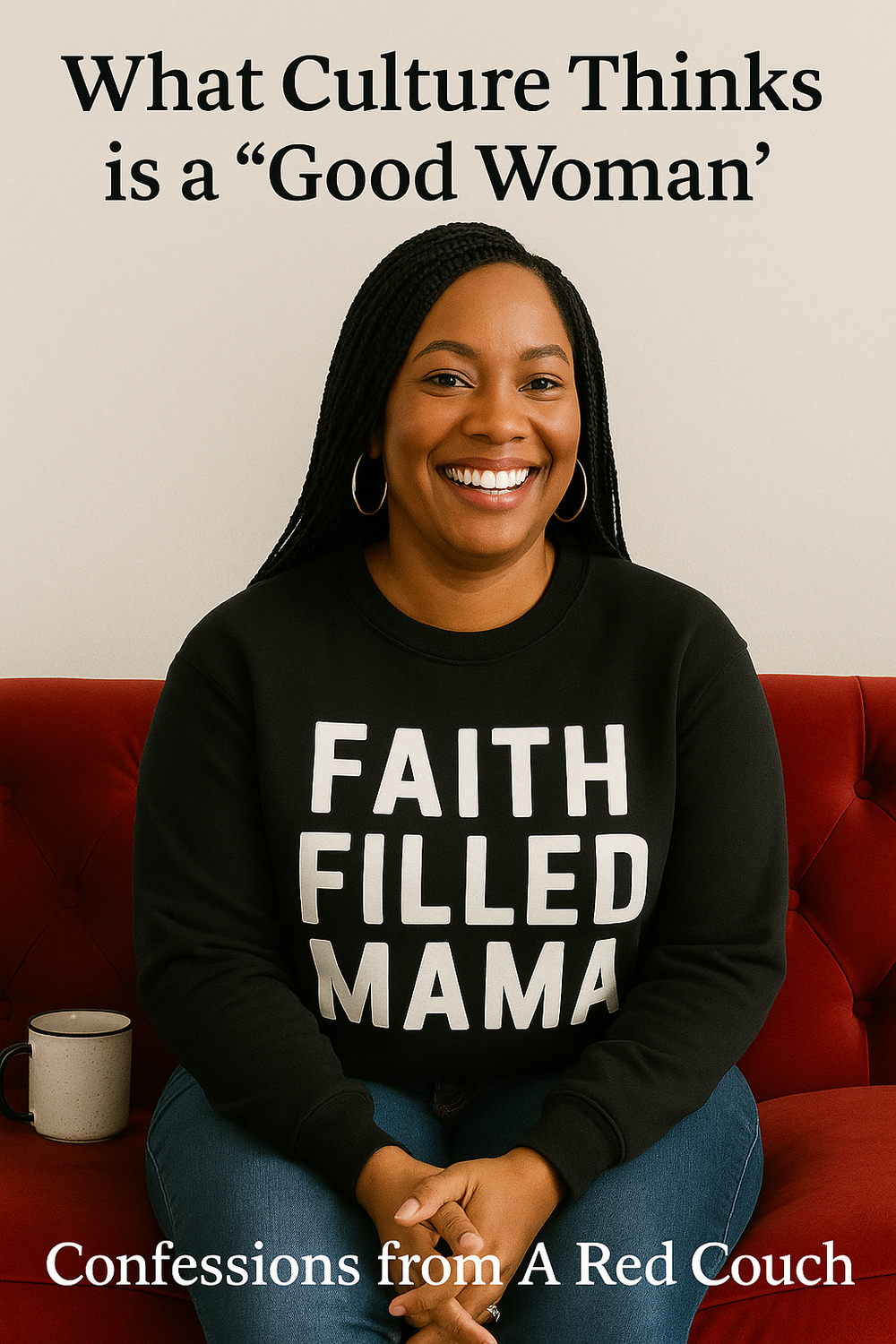
Somewhere along the line, culture decided that being a “good woman” meant shrinking yourself down to fit inside a box made of casseroles, laundry baskets, and children’s playdates. According to this script, a good woman is quiet, docile, and—if we’re being real—pretty much a glorified background character in her own life. Smile, nod, keep the peace, and make sure dinner’s on the table by six.
But here’s the thing: that’s not the fullness of who we are. That’s not the fullness of who we were ever meant to be.
Human beings—men and women alike—are wired with instincts: survival, leadership, creativity, passion, drive. The difference is, women have historically been told to stuff those instincts into a nice little box and only pull them out if it benefits someone else. Meanwhile, men have been praised for being bold, decisive, and ambitious—even when they mess up spectacularly.
The Myth of Docility
Let’s just call it out: being a docile subordinate has never been the definition of womanhood. Sure, nurturing, caring, and raising children are powerful roles—but they’re not the only roles. The idea that women should only exist in the home while men conquer the world isn’t just outdated, it’s unnatural.
And if you need proof, open up your Bible.
Deborah: The Original Disruptor
Deborah wasn’t baking bread in the background while the men handled business. Sis was a judge—a national leader—who led a military strike and won. She didn’t ask permission to step into her calling, and she didn’t apologize for leading. She wasn’t considered “less of a woman” because she wasn’t in the kitchen. She was God’s woman, and that was enough.
Deborah proves what we already know deep down: women have the same innate instincts as men—strategy, courage, vision, and strength. The difference? We’ve always had to be more calculated. We think about future generations. We make moves with the long game in mind. We carry the weight of both survival and legacy. That’s not weakness. That’s power.
My Confession
When I was married, I tried to tame myself. I bought into the idea that being a “good wife” and a “good woman of God” meant shrinking—being quieter, being smaller, being less me. I thought submission meant erasing myself. I boxed up my fire, my voice, my leadership instincts, and tried to wear a version of womanhood that didn’t fit.
And let me be honest with you: it almost destroyed me.
I slipped into a deep depression. I was low-key suicidal, walking around looking like I had it all together while inside I was drowning. Because nothing will crush your soul faster than trying to kill the parts of you God put there on purpose.
But here’s what I’ve learned: being a woman of God was never supposed to mean being invisible. Proverbs 31 paints a picture of a woman who is strong, resourceful, respected, and business-minded—not a woman erased. Galatians 5:1 reminds us, “It is for freedom that Christ has set us free. Stand firm, then, and do not let yourselves be burdened again by a yoke of slavery.” That includes the chains of cultural expectations.
Being a wife was never supposed to mean silencing your own purpose. Jeremiah 29:11 tells us, “For I know the plans I have for you, declares the Lord, plans to prosper you and not to harm you, plans to give you a hope and a future.” Nowhere in that verse does it say, “as long as you stay small and don’t rock the boat.”
I had to learn the hard way that fitting into a cultural box wasn’t obedience to God—it was obedience to people. And people will have you broken, bitter, and buried long before your time if you let them.
Now? I refuse. I refuse to shrink, to tame, to box myself in for someone else’s comfort. Because God called me to live fully, not silently. And if that means breaking culture’s definition of a “good woman,” so be it.
✨Sis, are you still trying to fit into someone else’s definition of “good”? What parts of you have you boxed up that God actually called you to use?