


Not every coin produced by the United States Mint is embraced by the public or does its job for a consequential period of time. Some start out promising and then drop off, while others are spectacular failures from the outset.
This is not to say that any of these coins are not interesting or unwanted, as they all have avid collector bases. In some cases, they can be both rare and expensive.
What we mean by “failed” is that a coin’s design, production, and demand as currency just were not there to justify its existence. As often happens with government, they are reluctant to “pull the plug” on obvious mistakes and unnecessary denominations and series.
Here is CoinWeek’s list of Ten U.S. Coin “Failures”.
1. The $3 Gold Piece

When Congress authorized the Three-Dollar Gold piece in 1853, the logic was questionable from the start. Many believed the denomination would simplify buying sheets of three-cent postage stamps. But when the postal rate dropped to two cents in 1883, that rationale evaporated.
Although the coin debuted with a robust mintage in 1854, annual production soon plunged. Its size—only slightly larger than the long-established quarter eagle—offered no clear advantage, and the public simply didn’t need it. By 1889, the Mint quietly retired the denomination. Today, the coin remains interesting mainly for its oddity and rarity in later dates.
2. The Eisenhower Dollar
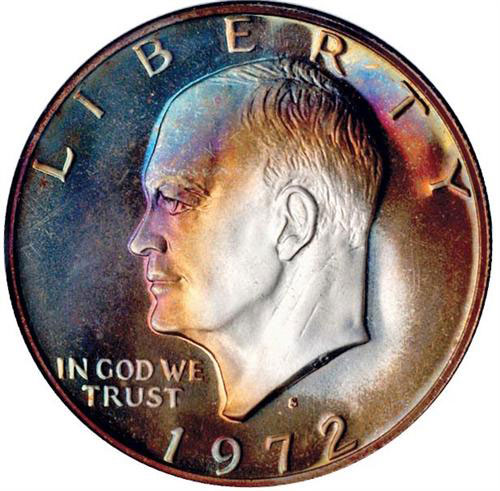
The Eisenhower Dollar (1971–1978) honored both President Dwight D. Eisenhower and the Apollo 11 mission. It was also the last large circulating dollar coin struck in base metal.
Despite enormous demand during its launch—over 280 million coins minted in the first two years—the Ike Dollar quickly stalled. The coin was large, heavy, and inconvenient for daily use, and most vending machines couldn’t accept it. Collectors disliked the stiff Mint premiums attached to the 40% silver versions, which helped fund the short-lived Eisenhower College.
By the mid-1970s, Treasury reports showed that most Ike Dollars were sitting idle in vaults. The denomination was replaced soon after by the smaller Susan B. Anthony Dollar.
3. The 20-Cent Piece
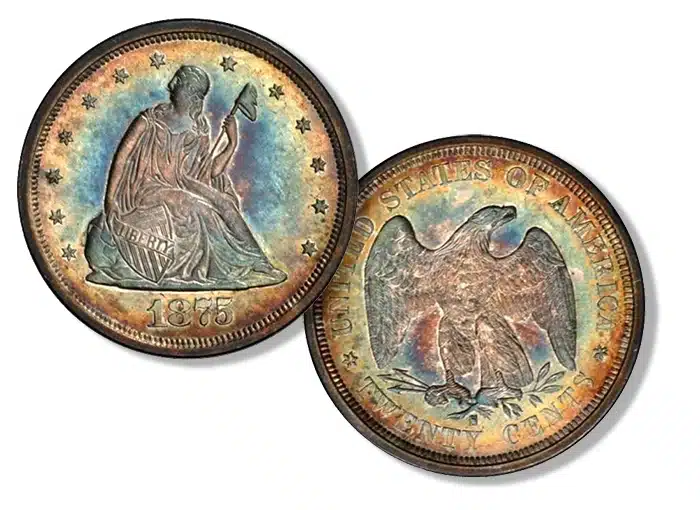
The 20-cent piece, struck from 1875 to 1878, existed largely thanks to Nevada Senator John P. Jones and the enormous silver output of the Comstock Lode. The Mint already produced Trade Dollars for export, so another silver denomination wasn’t truly needed.
The biggest problem, however, was confusion. With a nearly identical obverse to the quarter and a similar reverse, the public constantly mixed the two up. And in the eastern states—where small coins already circulated freely—the denomination solved no genuine monetary need. Production ended rapidly, and only Proofs were made during the final two years.
4. The Flying Eagle Cent
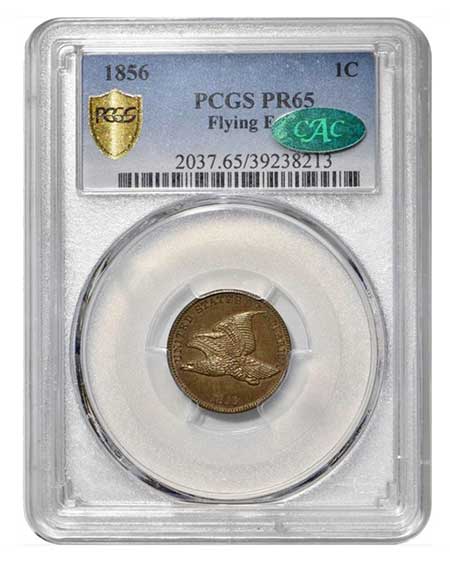
The Flying Eagle Cent (1856–1858) didn’t fail due to public disinterest. Instead, it collapsed under its own technical challenges.
When copper prices made the large cent too costly, the Mint shifted to a smaller copper-nickel coin. The Flying Eagle design worked well in patterns, but in mass production the hard alloy and high-relief devices caused striking problems. Dies cracked frequently, and many coins emerged weakly struck.
After just two circulating years, the Mint replaced the design with the Indian Head Cent. A few years later, the copper-nickel alloy itself was abandoned.
5. The $4 Stella
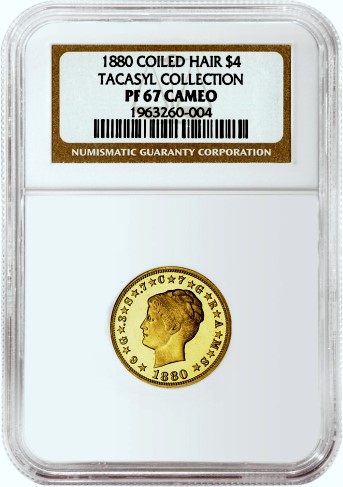
In the late 1870s, Congress explored creating a U.S. gold coin compatible with Europe’s Latin Monetary Union. Representative John A. Kasson championed a $4 coin—the Stella—designed to match the value of a French 20-franc piece.
Unfortunately, the plan never worked. A Stella contained slightly more gold than its European counterpart, preventing a true 1:1 exchange rate.
Meanwhile, Dr. William Hubbell’s proposed “goloid” alloy sparked skepticism at the Mint.
Only 465 Proof Stellas were struck for presentation purposes in 1879 and 1880. Without public support, the idea faded. While the coin later gained notoriety through rumors of being worn in Washington social circles, its real legacy is as a short-lived experiment in international currency.
6. The Presidential Dollar Series
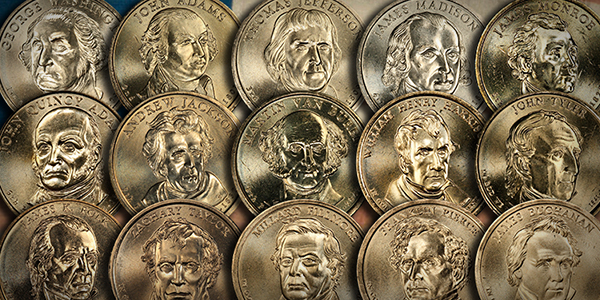
Launched in 2007, the Presidential $1 Coin Program aimed to revitalize the dollar coin and spark historical interest. Congress approved four designs per year featuring U.S. presidents in order of service.
Although the Mint produced nearly a billion coins during the first year alone, the series quickly stalled. Americans preferred paper currency, and the rising stockpile of uncirculated Presidential Dollars eventually exceeded $1.4 billion.
The program also faced controversy when thousands of coins left the Mint without edge lettering, omitting the date, mintmark, and national mottos. By 2011, the coins were pulled from circulation and struck only for collectors.
7. The Susan B. Anthony Dollar
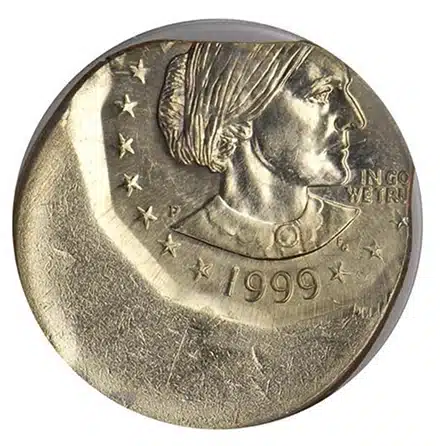
Introduced in 1979, the Susan B. Anthony Dollar was designed as a practical replacement for the bulky Eisenhower Dollar and marked the first appearance of a real woman on a circulating U.S. coin.
However, the coin’s size proved fatal. At only 2.2 mm wider than a quarter, it looked and felt too similar, leading to constant confusion.
Vending machine companies spent heavily to update equipment, yet the public still preferred dollar bills.
After weak demand, circulation strikes ended in 1981. The Mint briefly revived the coin in 1999 to meet a temporary shortage of dollar coins, but the denomination never found public acceptance.
8. The Two-Cent Piece
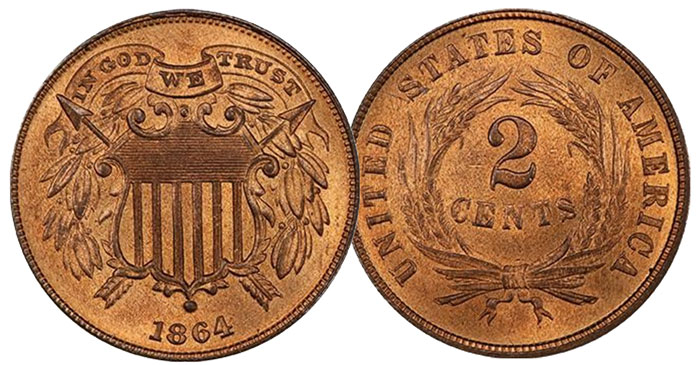
Created during the Civil War to alleviate a widespread coin shortage, the Two-Cent Piece debuted in 1864 and became the first U.S. coin to feature IN GOD WE TRUST.
Although early production was strong, demand collapsed after the war. Previously hoarded coins returned to circulation, and the introduction of the nickel in 1866 further reduced the denomination’s usefulness. By 1873, Congress formally ended the series.
9. The Three-Cent Silver (Trime)
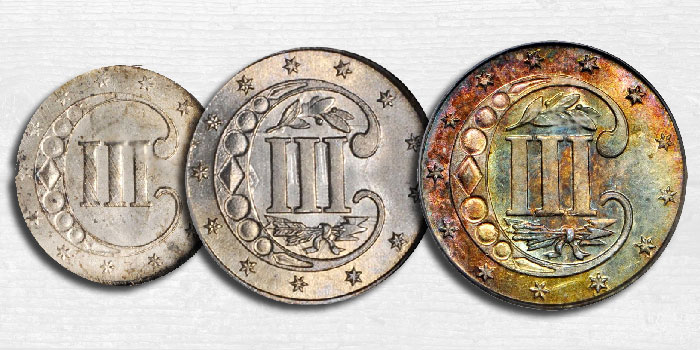
Authorized in 1851, the tiny silver trime served two purposes: replacing worn Spanish silver still circulating in the U.S. and complementing the new three-cent postal rate.
Because its silver content was intentionally below face value, the trime circulated freely without being hoarded—a rarity for the era. Yet during the Civil War, even these coins disappeared from circulation. When silver prices surged afterward, Congress approved the copper-nickel Three-Cent Nickel in 1865.
The trime limped along for several years, with mintages dropping below 5,000 pieces annually after 1867. It was finally abolished in 1873.
10. The 1995–1996 Olympic Commemorative Series
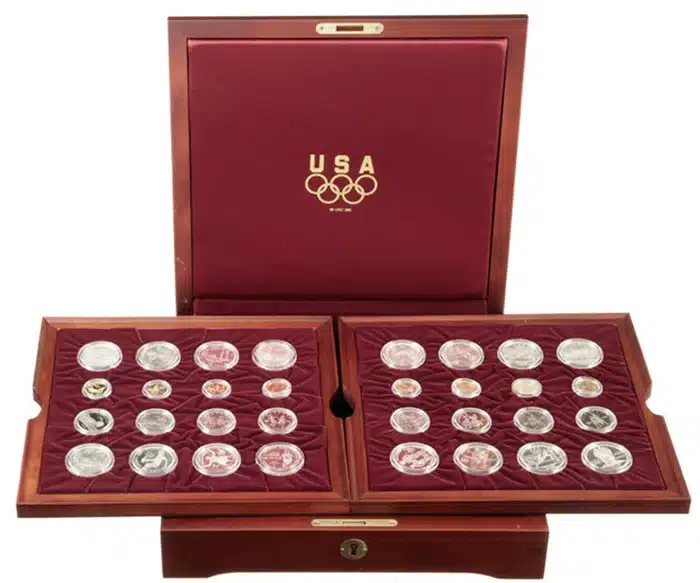
The modern commemorative coin program nearly collapsed under the weight of the 1995–1996 Atlanta Olympic issues. Featuring 16 designs in both Proof and Uncirculated versions, the series ballooned into a 32-coin lineup.
Collectors felt overwhelmed. Many designs looked formulaic, and sales fell far short of expectations. Although the program was intended to raise funds for U.S. Olympic teams, the sheer volume discouraged buyers.
Mint Director Philip Diehl later pushed for major reforms, shifting commemorative efforts toward more focused—and far more popular—programs like the 50 State Quarters.
What Do You Think Belongs on This List?
Collectors love to debate the Mint’s missteps. Which coins would you add—or remove—from this list? Share your thoughts in the comments.
* * *
The post 10 U.S. Coins That Flopped: Designs, Denominations, and Decisions the Mint Would Rather Forget appeared first on CoinWeek: Rare Coin, Currency, and Bullion News for Collectors.